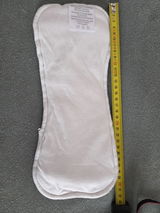
Swim diapers - Safe splashing & sustainable bathing

With our swim diapers, your baby is perfectly equipped for bathing, splashing around, or swimming lessons. These reusable swim diapers offer reliable protection in the water while being environmentally friendly and comfortable to wear.

Advantages of our swim diapers

  • Leak-proof & hygienic: Specially designed to keep small accidents safe - ideal for baby swimming, beach bathing or beach holidays
  • Comfortable & perfect fit: Thanks to elastic leg cuffs and waist, the swim diapers not only fit comfortably but also securely
  • Reusable & sustainable: Simply rinse after swimming and use again and again - this not only saves waste but also a lot of money
  • Stylish & practical: Available in many cute designs so your baby will look good in the water too

Why choose reusable swim diapers?


Unlike disposable swim diapers, our reusable models are not only more sustainable but also more cost-effective in the long run. They're the perfect choice for all parents who value eco-friendliness and convenience.

Our tip: For a completely carefree bathing experience, combine the swim diaper with a practical wet bag for transport.

Discover swim diapers now and enjoy your next swim trip in an environmentally friendly way!

Why Lumina Cloth Diapers?

Modern cloth diapers made from recycled material

Eine lächelnde Frau mit Tätowierungen steht in einem Kinderzimmer und hält einen Stapel bunter Stoffwindeln. In dem Raum befinden sich ein Wandbild mit einem Baum, ein Kinderbett und ein Wickeltisch, während im Vordergrund eine Fotoausrüstung zu sehen ist.

Developed with love and expertise

I'm Andrea, and I've been a passionate cloth diaper consultant since 2020. Since 2019, I've been able to diaper our son with cloth diapers and shared this passion with my best friend. Not only was waste reduction important to us, but also the health of our children. All of this motivated me to create something that works for everyone.

Thanks to this friendship, I had the opportunity to test various brands and systems, which led to the creation of the LUMINA brand. I combined the best of the cloth diaper world and various brands to develop our diapers. With the support of customers and testers, our product range was then created.

It has always been important to me to be able to offer the right product for every family's needs, at affordable prices and with the highest quality standards.

Did you like anything about it in the end?

You've already looked at that.


Schön zu wissen

FAQ

Washing and care

1. How often should I wash cloth diapers?

Cloth diapers should be washed at least every 2-4 days to prevent unpleasant odors and maintain the quality of the diapers.

2. How do I prepare cloth diapers for washing?

Remove all solid residues (e.g., by rinsing or shaking off) before storage. For diapers with inserts, you should remove the inserts from the diaper if possible.

For stool residues, it is advisable to rinse with cold water to minimize odors, but note that these diapers must be stored in a separate wet bag or dried beforehand to prevent mold growth. Excessively wet inserts or diapers should also be dried before storage to prevent liquid from forming in the wet bag.

3. At what temperature should I wash cloth diapers?

Cloth diapers should normally be washed at 40 to 60 degrees Celsius, depending on the manufacturer's instructions. At 60 degrees, bacteria and germs are better removed, but you should observe the care instructions for the diapers to avoid shortening their lifespan. PUL covers should always be washed at 40 degrees to significantly increase their lifespan, and ideally with colored laundry and the appropriate detergent.

4. Can I use fabric softener?

Fabric softener must be avoided as it can impair the absorbency of cloth diapers. Instead, you can use a special detergent for cloth diapers that leaves no residue and is gentle on the materials. You can, of course, find this in our Ulrich natürlich shop.

Detergent should always meet the following criteria: - less than 15% soap content, even better under 5% - no chemical bleaches - no artificial fragrances - no preservatives or dyes

5. How can I remove stains from cloth diapers?

Stains can be removed by sun (UV light) or a special stain remover for cloth diapers, which you can find from Ulrich natürlich in our shop. Another method is to pre-treat the stains on the diapers with curd soap and then wash them in the washing machine to remove stains. (always just before washing)

6. Should I wash my cloth diapers before first use?

Yes, we recommend washing cloth diapers before first use. This helps to increase absorbency and remove any residues from production. Cloth diapers reach their full absorbency after about 8-10 washes.

7. Can I dry cloth diapers in a dryer?

No, please don't. Even if some products state it's possible and the dryer dries at a low temperature and on a gentle cycle, frequent tumble drying can permanently damage the material and remove the absorbent material, as dryers de-lint (you'll notice it in the lint filter). Air drying is definitely the better choice; hang the diapers on a clothesline.

8. How can I avoid unpleasant odors?

To avoid unpleasant odors, diapers should be washed regularly with the correct washing routine and dried properly. The storage system (such as a wet bag) should be well ventilated, and it is helpful to store diapers in a clean, dry room.

9. How do I wash properly?

  • Simply put your diapers in the washing machine drum with our self-emptying wet bag, after opening both zippers.
  • First, select a short program like "Pre-rinse" or "Rinse and spin."
  • After this program, the coarse impurities are already out of your machine; now select a suitable full wash program and add more water + programs (pre-rinse, post-rinse, etc.).
  • Spin speed max. 1200
  • Observe detergent dosage (please pay attention to our recommended detergent - Ulrich natürlich Diaper Detergent to ensure long durability).
  • For heavily calciferous water, we strongly recommend adding a descaler such as the lactic acid descaler from Ulrich natürlich (protects your materials and your machine).
  • You can also add other laundry that you want to wash at the selected temperature; the machine should be well and efficiently filled.
  • Start the washing program.

How many cloth diapers do I need?

The number of cloth diapers you need depends on various factors, such as the frequency of diaper changes, the drying time of the diapers, and how often you want to wash them. Here are some general guidelines:

1. How many cloth diapers do I need for the day?

For one day (24 hours), you will need about 10 to 12 cloth diapers for newborns to care for your baby, and after a few months, this reduces to about 6-8 cloth diapers. This includes diapers for the day and for the night if you also use cloth diapers at night.

2. How many diapers are needed for the entire week?

Since you need to wash the diapers regularly, it is recommended to have at least 25 to 30 diapers (absorbent inserts), not including boosters, to ensure you have enough diapers while others are being washed and dried.

3. How many cloth diapers for newborns?

Newborns often go through more diapers per day, usually 10 to 12 times. Therefore, you might need 30 to 35 diapers for a newborn, especially in the first few weeks when you need to change frequently daily, depending on whether you also practice elimination communication.

4. How long does a cloth diaper last?

The lifespan of a cloth diaper depends on the frequency of washing and care. High-quality cloth diapers can last several years if properly cared for. Many parents have enough diapers to use them for at least 2-3 days without washing. As for absorbency, it always depends on the materials you use for the inserts and how you combine them. However, we recommend need-oriented diapering (new diapers when wet).

5. Should I have different sizes of cloth diapers?

Yes, many parents start with newborn sizes and switch to one-size once the baby grows. One-size diapers are diapers that grow with the baby, so you don't need multiple sets of diapers for different age groups.

6. Do I need specific diapers for the night?

Yes, it's a good idea to have special night diapers, as these require more absorbency. Our night diapers are designed with multiple layers and an additional insert to provide more absorbency to keep your baby dry all night long.

7. How many inserts do I need?

In addition to the diapers, you also need inserts (e.g., for newborns or particularly absorbent diapers). For a complete diapering routine, you should have about 25 to 35 inserts, depending on your needs.

Average Conclusion:

  • For older children during the day: 6-10 absorbent inserts plus booster inserts - and one or two diaper covers in case one gets soiled for changing
  • For the entire week: 25-30 absorbent inserts - approx. 5-7 diaper covers
  • For newborns: 30-35 absorbent inserts - approx. 4-5 diaper covers

This way, you'll have enough diapers to get through the week without stress, even if some diapers are being washed. If your child is a frequent wetter, you can always stock up.

These are merely standard average values from our experience. Of course, your child may have times with more specific needs, in which case you can always adapt cloth diapers more flexibly or plan shorter washing intervals.

What accessories do I need?

The number of cloth diapers you need depends on various factors, such as the frequency of diaper changes, the drying time of the diapers, and how often you want to wash them. Here are some general guidelines:

1. How many cloth diapers do I need for the day?

For one day (24 hours), you will need about 10 to 12 cloth diapers for newborns to care for your baby, and after a few months, this reduces to about 6-8 cloth diapers. This includes diapers for the day and for the night if you also use cloth diapers at night.

2. How many diapers are needed for the entire week?

Since you need to wash the diapers regularly, it is recommended to have at least 25 to 30 diapers (absorbent inserts), not including boosters, to ensure you have enough diapers while others are being washed and dried.

3. How many cloth diapers for newborns?

Newborns often go through more diapers per day, usually 10 to 12 times. Therefore, you might need 30 to 35 diapers for a newborn, especially in the first few weeks when you need to change frequently daily, depending on whether you also practice elimination communication.

4. How long does a cloth diaper last?

The lifespan of a cloth diaper depends on the frequency of washing and care. High-quality cloth diapers can last several years if properly cared for. Many parents have enough diapers to use them for at least 2-3 days without washing. As for absorbency, it always depends on the materials you use for the inserts and how you combine them. However, we recommend need-oriented diapering (new diapers when wet).

5. Should I have different sizes of cloth diapers?

Yes, many parents start with newborn sizes and switch to one-size once the baby grows. One-size diapers are diapers that grow with the baby, so you don't need multiple sets of diapers for different age groups.

6. Do I need specific diapers for the night?

Yes, it's a good idea to have special night diapers, as these require more absorbency. Our night diapers are designed with multiple layers and an additional insert to provide more absorbency to keep your baby dry all night long.

7. How many inserts do I need?

In addition to the diapers, you also need inserts (e.g., for newborns or particularly absorbent diapers). For a complete diapering routine, you should have about 25 to 35 inserts, depending on your needs.

Average Conclusion:

  • For older children during the day: 6-10 absorbent inserts plus booster inserts - and one or two diaper covers in case one gets soiled for changing
  • For the entire week: 25-30 absorbent inserts - approx. 5-7 diaper covers
  • For newborns: 30-35 absorbent inserts - approx. 4-5 diaper covers

This way, you'll have enough diapers to get through the week without stress, even if some diapers are being washed. If your child is a frequent wetter, you can always stock up.

These are merely standard average values from our experience. Of course, your child may have times with more specific needs, in which case you can always adapt cloth diapers more flexibly or plan shorter washing intervals.

Why washable feminine hygiene?

1. Why should I switch to washable feminine hygiene products?

Washable feminine hygiene products offer many advantages:

  • Environmentally friendly: They are reusable and help reduce the use of disposable products such as pads and tampons, resulting in less waste.

  • Cost-effective: Although the initial investment may seem higher, washable products can save you a lot of money in the long run because they can be reused many times.

  • Health benefit: Our washable products are made from natural materials that are gentle on the skin and do not contain chemical additives found in many disposable products.

  • Comfort: Many people find washable products more comfortable because they are made of breathable materials such as cotton or bamboo, which leads to less irritation.

2. How does a washable cloth pad work?

Washable cloth pads consist of several layers, including an absorbent layer and a water-repellent layer to prevent leakage. They are easy to use:

  • Place the pad in your underwear.

  • Change your pad as needed, usually every 4-6 hours, depending on the heaviness of your period.

  • After use, you can rinse the pad with cold water to remove blood, store it in a wet bag, and then wash it in the washing machine after your period.

3. How many washable pads do I need?

The number of pads you need depends on how often you want to change them. Typically, we recommend using 2-5 pads per day. You should always have enough pads to replace during the wash cycle. It's also a good idea to have several sizes (light, medium, and strong absorbency) to meet different needs.

4. How do I clean washable feminine hygiene products?

  • Pre-rinse: Rinse the pad with cold water to remove any residue. Avoid using hot water, as this can cause the blood to stick.

  • Washing: Machine wash the pads at 40-60°C using a mild detergent. Avoid fabric softener, as this can impair absorbency.

  • Drying: Air dry the pads.

5. Can I use washable pads when traveling?

Yes! Washable pads are also a good choice for traveling. You can use a wet bag (reusable bag) to safely transport used pads until you can wash them. This provides a hygienic solution even when you're on the go.

6. What is a menstrual cup and why should I use it?

A menstrual cup is a flexible, reusable container inserted into the vaginal canal to collect menstrual blood. It is a popular alternative to tampons and pads for the following reasons:

  • Longer wearable: A menstrual cup can be worn for up to 12 hours, depending on the intensity of your period.

  • Environmentally friendly: Since it is reusable, the waste generated by disposable products is significantly reduced.

  • Cost-effective: Although the cup is more expensive initially, it will last for many years and save you money in the long run.

  • Fewer cramps : By using a menstrual cup instead of disposable tampons, your mucous membrane remains intact and cramps can be reduced

7. Is the menstrual cup safe?

Yes, menstrual cups are safe when used correctly. They are made of medical-grade silicone and are non-toxic. Make sure to clean the cup regularly and not wear it for longer than recommended (usually 8-12 hours).

8. How long does a menstrual cup last?

With proper care, a menstrual cup can last for several years, making it a very cost-effective and environmentally friendly option.

9. Why are washable products better for the environment?

Washable products reduce the need for disposable items, which typically end up in landfills and take hundreds of years to decompose. They also save on packaging and help reduce plastic consumption. By switching to washable products, you can help reduce the environmental impact of period products.

Conclusion:

Washable feminine hygiene products are an environmentally friendly, cost-effective, and healthy choice. They offer you a convenient way to manage your period without relying on disposable products. Whether pads or menstrual cups, these products offer a variety of benefits for you and the environment.